Off food after a move: the common causes
28/10/2026 · PetM&M veterinary team
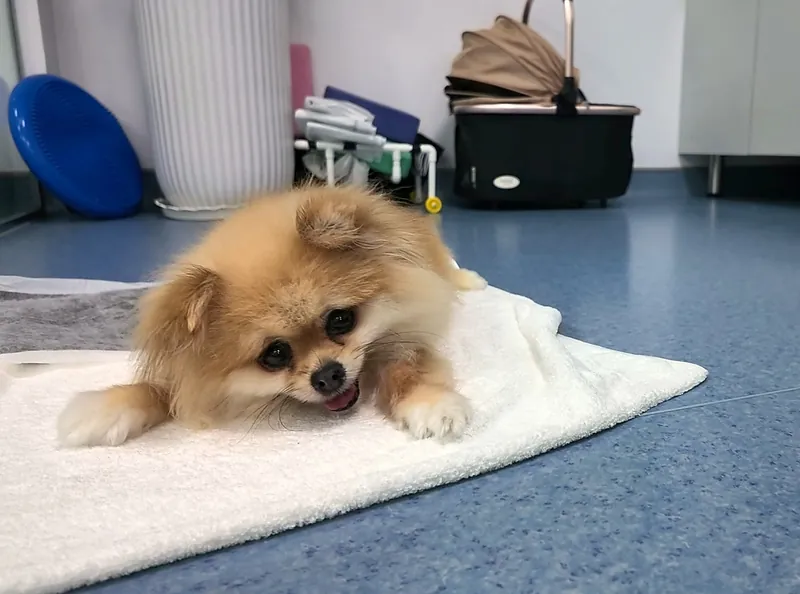
A dog who came from Cambodia to Vietnam began vomiting and refusing food. The vet went through four causes: stress, late vaccines, parasites, foreign objects.
Loss of appetite is the hardest symptom for a vet. Almost any illness can make a pet stop eating, so it is very hard to find the cause from that one sign alone. The vet's job is to go step by step, ruling out each possibility in turn.
The dog's owner had come over from Cambodia, and the dog had been in Vietnam for only about two or three days. Around two days after arriving, the dog started vomiting, eating less, and then gradually stopped eating altogether. After the dog had vomited twice, the owner brought the puppy in.
On clinical examination, the dog was still alert with good reflexes. The puppy was not dehydrated and had no loose stools or diarrhoea. The lymph nodes were not swollen. The vaccination record showed the puppy had been vaccinated in Cambodia, but the vaccinations were overdue. There had also been no worming or parasite prevention, inside or out.
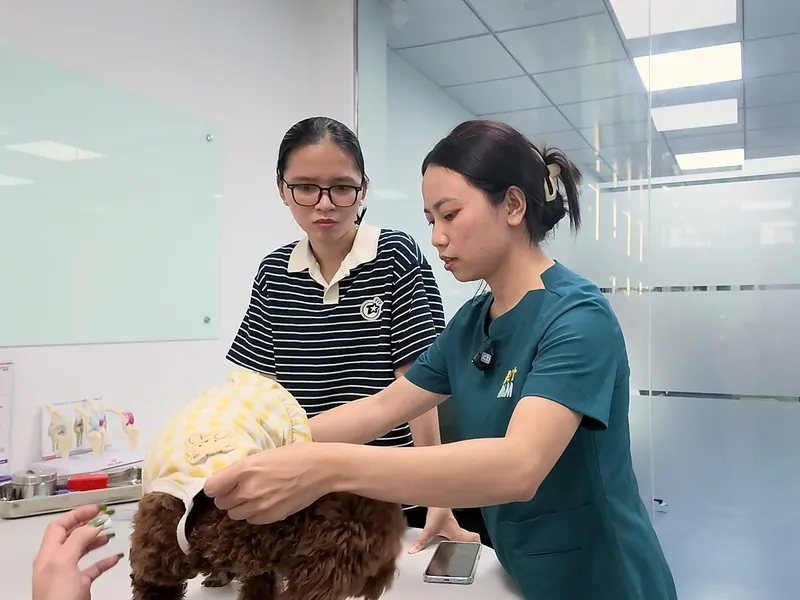
In this case, I considered four possibilities. The simplest was stress from the change of home, leaving the puppy tired and not wanting to eat. The weather in Saigon was also changing at the time, with sun and rain coming and going, and the puppy may not yet have adjusted.
The second possibility was incomplete vaccine protection. When a pet's surroundings change, their resistance drops. Without reliable vaccine protection, a pet may be in the incubation period of a disease. At that stage the symptoms have not clearly appeared yet, and loss of appetite may be the only sign.
The third possibility was parasites, because the puppy was young and had not had any prevention. In this case, we ran a faecal test to see whether there were intestinal parasites, and checked the coat and skin for ticks and lice.
The fourth possibility was a foreign object. Young pets often lick and chew all sorts of things, which can cause an intussusception or a foreign body in the intestine. In that case, though, the pet would show pain when the vet feels the abdomen. This dog showed no reaction when the abdomen was examined, so we could rule it out for now.
Because the puppy was so young, we did not consider hormonal problems or internal organ disease as causes of the poor appetite for the time being. In young pets like this, the cause is most often the change of environment, incomplete vaccinations or parasites.
During the visit, we offered some nutritional pâté, and the puppy ate it eagerly and licked the bowl clean. This is something we see quite often: owners say that at home their pet just comes over, sniffs and walks away, yet here they eat anything they are given. Pâté can help stimulate a pet to eat again, but it has to be used properly, otherwise your pet will become fussy.
Even when a pet just moves from one home to another within the country, you need to keep a very close eye on vaccinations and parasites. When a pet moves somewhere with a completely different environment and climate, it is all the easier for them to fall ill.
So if you plan to leave your pet with someone else, or take your pet to another country, full vaccinations and parasite prevention are a must. First for your own peace of mind, and second so your pet does not fall ill from things that can be prevented in advance.
If your pet has stopped eating, don't wait. Bring your pet in so the vet can rule out each cause, rather than guessing at home.